

Steampunk: Man and Machine
A Journey into the Retro-Futuristic World of Victorian Innovation

Thanks for reading this very first installation in a new series about “Punk” Genres.
“What the heck is that?” you ask.
“I’m so glad you asked,” I reply. “First of all, let me narrow the scope of the conversation a little and tell you that I’m not talking about music in this instance but about literary styles.”
“Oh. I’m so glad you clarified that for me,” you say, your voice dripping with sarcasm.
I’ll be completely transparent with you. I had to ask myself the same question. “Punk genre?” I mean, I’d heard about today’s punk genre, but it’s not one that I’ve thoroughly explored - on purpose. Today, I want to tell you a little bit about the Steampunk genre.
Steampunk is a sub-genre of science fiction that marries 19th-century, Victorian-era steam-powered machines with the modern technologies of today. If you’re like me, you’ll have to look up the Victorian Era to remember when that was, so I’ve done it for you. This was the time during Queen Victoria’s rule over Great Britain (1837-1901) and was characterized by Britain’s expansion of its empire around the world. In this post-Industrial Revolution world, electricity soon became a driving force for change and technological advancement, but in the alternative histories of steampunk worlds, steam power remained the primary power source.
Anyone who enjoys speculative fiction has likely encountered the steampunk genre. Honestly, of all the punk genres, steampunk seems to be the most widely recognized. It’s unique blend of historical and futuristic elements is hard to miss.
In today’s post, we are going to briefly explore the key features, themes, and appeal of the steampunk genre.
Origins and Inspirations
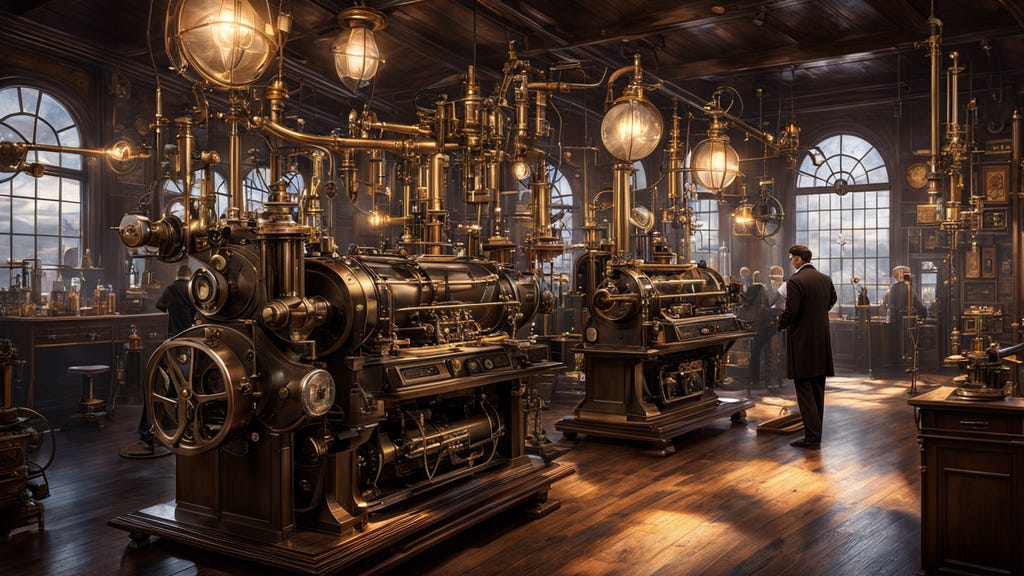
Steampunk is a retro-futuristic sub-genre of science fiction that incorporates elements of 19th-century industrial steam-powered machinery fused with modern scientific advances and technologies. It often imagines an alternate history where steam power remained the predominant energy source, shaping the development of fantastic inventions and aesthetics.
The term "steampunk" was coined in 1987 by author K.W. Jeter, seeking to describe the works of himself, Tim Powers, and James Blaylock that were set in a romanticized, re-imagined Victorian era[1]. It drew inspiration from the scientific romances of the likes of Jules Verne and H.G. Wells, as well as the Victorian-era perspectives on fashion, culture, art, and architecture[1][3].
Key Characteristics
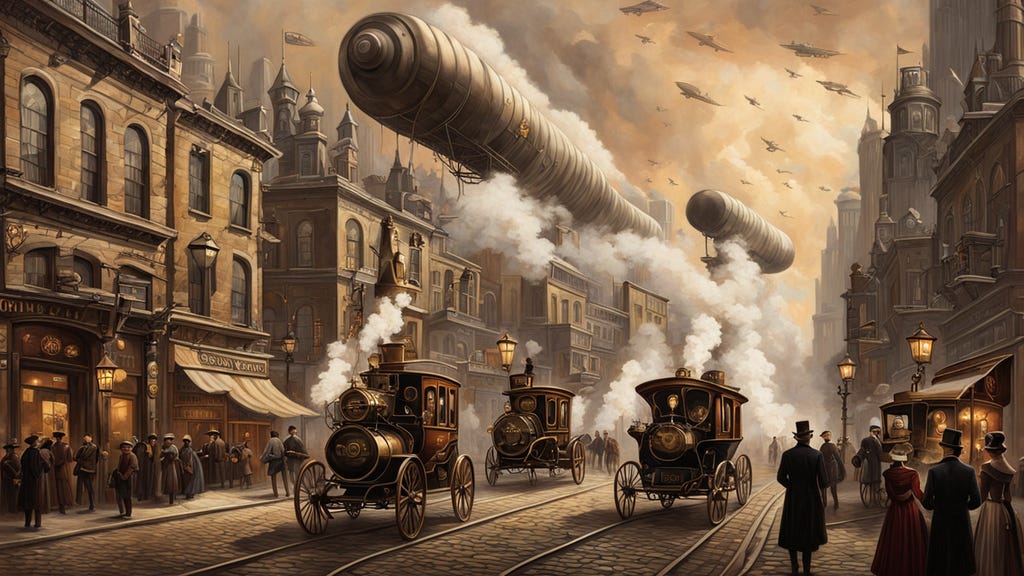
Steampunk is characterized by the presence of anachronistic technologies and inventions that are envisioned through a 19th-century lens, such as steam-powered robots, airships, analog computers, and retro-futuristic gadgets[1][3].
These stories often imagine alternate histories of the Victorian era or American Wild West in which steam power remains mainstream[1], blending modern scientific concepts with steam-driven machinery[3][4].
Steampunk has also been known to incorporate elements from other genres like fantasy, horror, and historical fiction[1].
Visual and Aesthetic Elements
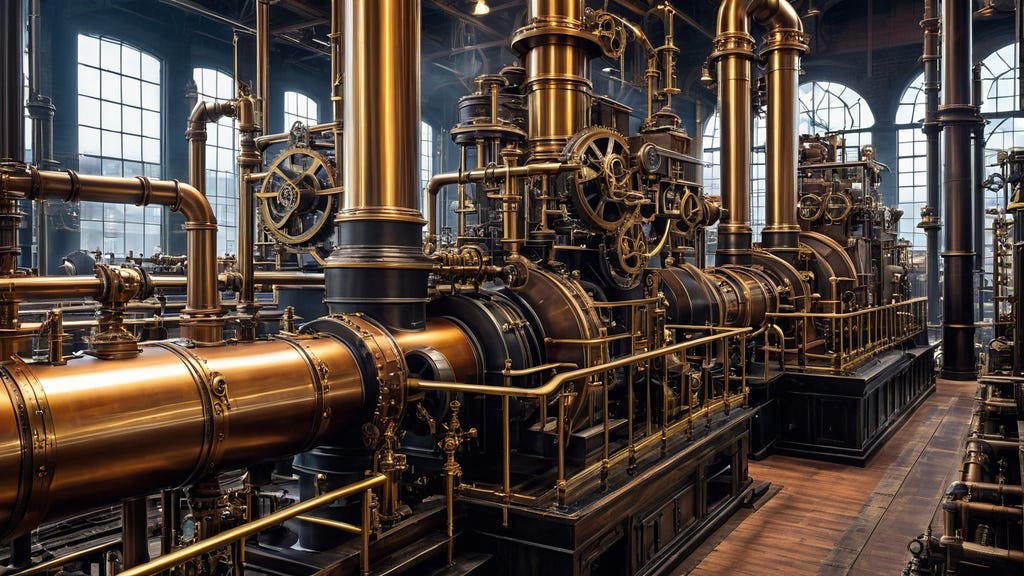
When you see it, you know it. Steampunk is most recognizable by its industrial machinery and steam technology, with its exposed gears, pipes, and brass fittings[1][3][4]. It also sports ornate, antiqued designs constructed of wood and metal[3].
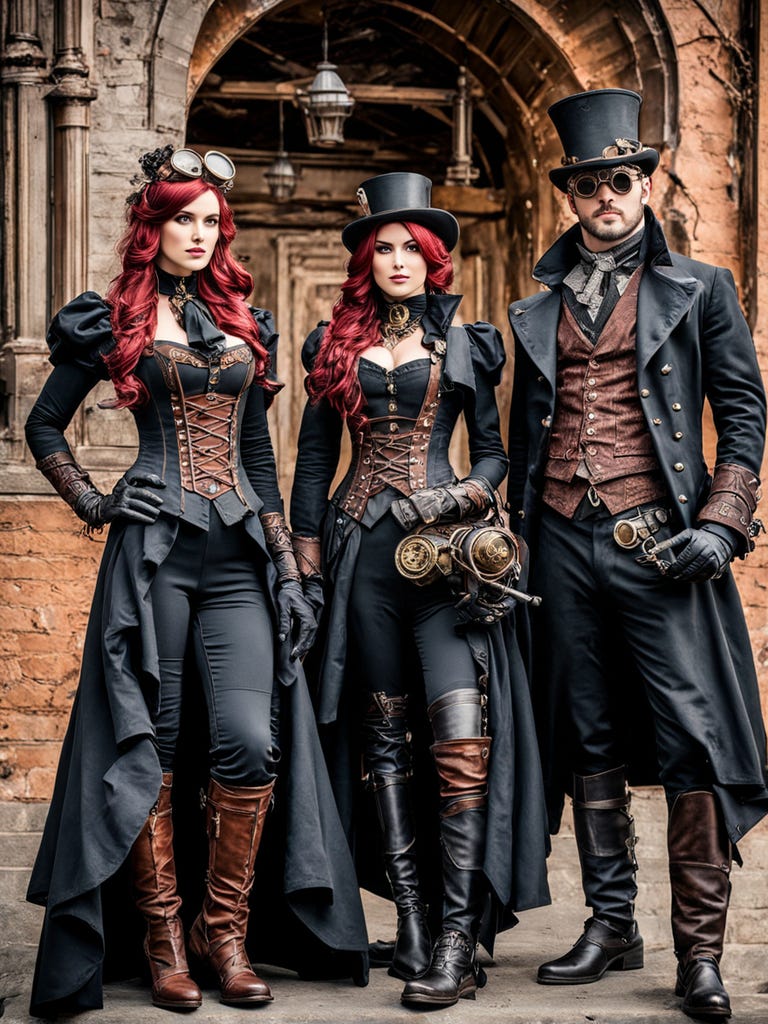
Steampunk’s Victorian-inspired fashion with its corsets, top hats, goggles, and long coats[3][4] have become a popular style to mimic through cosplay and is often found at conventions where science fiction and fantasy enthusiasts gather to share their passion for this very particular form of art.
The book covers and movie posters of steampunk stories are typically composed of sepia-toned color palettes and aged, vintage aesthetics[3][4].
Themes and Narrative Focus
Exploration of alternate pasts or futures shaped by steam technology[1][4]
Celebration of invention, progress, and the adventurous spirit[2][4]
Social commentary on class, industrialization, and technological impact[1]
Blending of science and fantasy, reason and romanticism[2][4]
Impact and Influence
Steampunk has transcended literature to influence various media, including film (The League of Extraordinary Gentlemen, Sherlock Holmes, and The Illusionist), video games (Frostpunk, Sky Fleet, and Airborne Kingdom), fashion, music, and maker culture[1][3][4]. It has inspired a vibrant subculture celebrating retro-futuristic aesthetics and DIY craftsmanship[2][3].
Notable Examples
Books
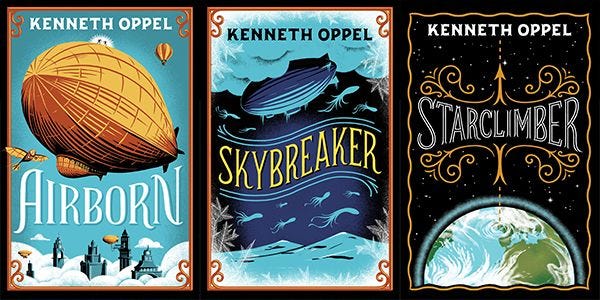
I haven’t read too many steampunk books, but I did enjoy the Matt Cruse trilogy by Kenneth Oppel, also known as the Airborn series, which consists of three books: "Airborn," "Skybreaker," and "Starclimber." The series follows the adventures of a young cabin boy named Matt Cruse aboard a luxurious airship and features elements of steampunk, adventure, and fantasy.
Airborn
In "Airborn," cabin boy Matt Cruse serves on the airship Aurora. He rescues a dying balloonist who speaks of strange sky creatures. A year later, passenger Kate de Vries joins the Aurora to prove these creatures' existence. When pirates attack, Matt and Kate end up on a remote island, discovering a new species of airborne creatures. Together, they must survive and reveal the truth.
Skybreaker
In "Skybreaker," Matt and Kate seek the Hyperion, a legendary ghost ship rumored to be filled with riches. Matt, now at the Airship Academy, teams up with Kate, pilot Hal, and gypsy girl Nadira. They face weather hazards, rival treasure hunters, and high-altitude dangers, uncovering the Hyperion's secrets and confronting personal demons.
Starclimber
In "Starclimber," Matt is chosen for a mission to travel into space aboard the Starclimber. Training for the journey strains his relationship with Kate, who also wants to join the mission. The crew faces sabotage, technical failures, and alien encounters, testing their courage and ambitions as they push the boundaries of exploration.


I also recently read the Signal Airship series. "The Guns Above" and "By Fire Above" by Robyn Bennis are military fantasy novels set in a world where airships and aerial warfare play central roles. The series combines elements of steampunk, military strategy, and sharp wit, focusing on the character Josette Dupre.
The Guns Above
In "The Guns Above," Josette Dupre becomes the first female airship captain in Garnia. Promoted after a heroic battle, she faces skepticism and sabotage from the army, which assigns Lord Bernat (Bernie) Hinkal to undermine her. Determined to prove her worth, Josette earns Bernie's respect as they navigate dangerous battles and political intrigue. The story explores themes of gender equality, leadership, and war's harsh realities.
By Fire Above
In "By Fire Above," Josette Dupre, now more seasoned, faces new challenges. Her hometown of Arle is captured by enemy forces, and she leads a mission to retake it. Alongside Bernie, now a trusted ally, Josette encounters fierce battles and complex strategies. The novel delves into their evolving relationship, loyalty, sacrifice, and the cost of war as they fight for victory and the people they love.
Movies
Here are a few steampunk movies for you to check out.


The League of Extraordinary Gentlemen (2003)
Based on the comic series, this movie brings together famous literary characters like Captain Nemo, Dr. Jekyll/Mr. Hyde, and the Invisible Man in a Victorian-era steampunk adventure with advanced steam-powered technology and vehicles.
Sherlock Holmes (2009) and Sherlock Holmes: A Game of Shadows (2011)
While not pure steampunk, these Robert Downey Jr. films incorporate steampunk aesthetics and technology into the classic Sherlock Holmes stories, with gadgets, machinery, and a retro-futuristic Victorian London setting.
The Illusionist (2006)
Set in early 20th-century Vienna, this period drama features a magician who uses innovative steampunk-inspired illusions and contraptions to perform his tricks.
I actually enjoyed The Prestige with Hugh Jackman and Christian Bale better than the Illusionist.
Video Games


Frostpunk
"Frostpunk" is a city-building survival game set in a frozen, post-apocalyptic world. Players lead a group of survivors to build and manage the last city on Earth, making tough moral decisions to ensure the community's survival. They must balance resources, maintain hope, and adapt to extreme cold while facing ethical dilemmas that affect society's future.
Sky Fleet
"Sky Fleet" is a tower defense and strategy game where players build and defend floating islands. Set in a world of airborne islands, players construct bases, gather resources, and deploy defenses to protect against waves of enemy attacks. The game combines base-building elements with strategic combat as players strive to safeguard their islands from various threats.
Airborne Kingdom
"Airborne Kingdom" is a city-building game where players construct and manage a floating city in the sky. Players explore a vast, open world, gather resources, and forge alliances with grounded kingdoms. The goal is to expand the airborne city, maintain its balance, and ensure the well-being of its inhabitants while uncovering ancient secrets and connecting with other civilizations.
Board Games
Reader and Subscriber Barry Eby of Talks with Meeples pointed out that my original analysis of steampunk examples omitted board games, of which there are many fine examples. Barry recommended the following games as a good place to start.


Planet Steam
"Planet Steam" is a board game where players compete to gather and trade resources in a steampunk-themed setting. They build and upgrade harvesting stations to extract resources like water, energy, and ore, and then trade these resources on a fluctuating market. Strategic planning and economic management are key as players aim to accumulate the most wealth by the end of the game.
Mission: Red Planet
"Mission: Red Planet" is a board game set in a steampunk universe where players act as competing mining corporations colonizing Mars. They recruit and deploy astronauts to claim resources and control territories on the planet. Through strategic planning and character actions, players aim to gather the most valuable resources and achieve mission goals to win the game.
Leviathans
"Leviathans" is a tactical miniatures board game set in an alternate history where giant, steam-powered airships engage in aerial combat. Players command fleets of these massive ships, strategizing movement and attacks to outmaneuver and defeat their opponents in a battle for dominance in the skies.
City of the Great Machine
"City of the Great Machine" is a board game set in a dystopian steampunk city controlled by a powerful AI called the Great Machine. One player takes on the role of the Great Machine, aiming to suppress the city's citizens, while other players act as heroes leading a rebellion. Through strategy, movement, and special actions, heroes attempt to incite revolts and complete missions to overthrow the Great Machine, while the AI player uses various means to maintain control and prevent the uprising.
Steampunk Rally
"Steampunk Rally" is a board game where players take on the roles of famous inventors racing fantastical steampunk vehicles. They draft cards to build and upgrade their machines, using gears, cogs, and steam power. Players then race across treacherous terrain, managing resources like heat and damage, to be the first to cross the finish line. Strategic building and efficient use of resources are key to winning the race.
Music


Now, this, I must admit, came as a bit of a surprise. Did you know that there is steampunk music? Here are a couple of artists for you to check out:
Abney Park, The Cog Is Dead, Steam Powered Giraffe[3]
In summary, steampunk reimagines the past through a lens of advanced steam technology, blending Victorian aesthetics with modern scientific concepts to create a unique retro-futuristic genre that celebrates invention, adventure, and an alternative industrial age.

What do you like or dislike about the Steampunk genre?
Which books, movies, or games in the Steampunk genre have you enjoyed the most?
What didn’t make this list that you would like to see added to this living document?
Do you know someone who might enjoy this post? Share it with them!
Explore other "Punk" Genres.
Here is a steampunk story that I read on Substack recently that I think you will enjoy.

This punk-genre article was written for the Sci-Friday Crew. View the crew members’ publications on the Sci-Friday landing page linked below.
Sources:
[1] https://en.wikipedia.org/wiki/Steampunk
[2] https://www.watchcityfestival.com/what-is-steampunk-1
[3] https://allaboutsteampunk.com
[4] https://steampunkavenue.com/en/blog/what-is-steampunk/
[5] https://tachyonpublications.com/product/steampunk/
Very interesting. I was intrigued by the genre when The Difference Engine first came out but since then I found it's a bit of a played-out genre at least in fiction, where not much new ever seems to occur.
Here's a list of steampunk or steampunk-adjacent films that I put together.
An important one that doesn't get much attention is the late Soviet sci-fi movie Kin-dza-dza which is incredibly original and creative.
https://letterboxd.com/hootsmaguire/list/steampunkd/
Kin-dza-dza available here
https://www.youtube.com/watch?v=RfVPw4FPk8o
Please, I’m glad to help.